 Enjoy Today
The AI Silence: Why We Must Keep Writing
I’ve noticed a disturbing trend lately.
My RSS feed is getting quieter. The technical bloggers I used to follow—the ones who wrote deep, messy, opinionated posts about debugging obscure race conditions or ranting about framework fatigue—are posting less often. Some have stopped entirely.
At the same time, my search results are louder than ever. But it’s a hollow kind of noise. Infinite pages of “Top 10 React Best Practices,” “How to fix Error X,” and “Comprehensive Guide to Y,” all sounding suspiciously similar. Perfect grammar, confident tone, and absolutely zero soul.
The internet is being reshaped by AI, and we are standing on the edge of a content ecosystem collapse.

The Balance Has Shifted
It’s not just a feeling. The numbers are starting to look grim.
In 2024, studies suggested that over 38% of new content in major tech communities was partially or fully AI-generated. For programming tutorials, that number shot up to 45%.
And here’s the kicker: humans are terrible at spotting it. The average reader can distinguish AI content from human writing with about 53% accuracy—literally a coin flip.

We are drowning in “slop”—low-effort, high-volume content generated to game SEO algorithms that are themselves being replaced by AI summarizers. Since Google rolled out AI Overviews, click-through rates for technical keywords have dropped by nearly 40%.
Why write a blog post if Google is just going to scrape it, chew it up, and spit out a summary without sending you a single visitor?
The Death of “Paid Knowledge”
For a while, “paying for knowledge” was the indie hacker dream. Write an ebook, sell a course, build a paid newsletter.
AI is killing that model for anyone who isn’t top-tier.
Why pay $50 for a beginner’s guide to Python when ChatGPT can teach you for free, interactively? The barrier to entry for information has dropped to zero. But the barrier to insight remains as high as ever.
The problem is, we are confusing the two.
The Homogenization of Thought
If you hang out on Hacker News or Reddit, you might have noticed the comments getting… blander.
Moderators are fighting a losing battle against AI-generated “thought pieces.” They look insightful on the surface but crumble under scrutiny. They are essentially remixes of the status quo.
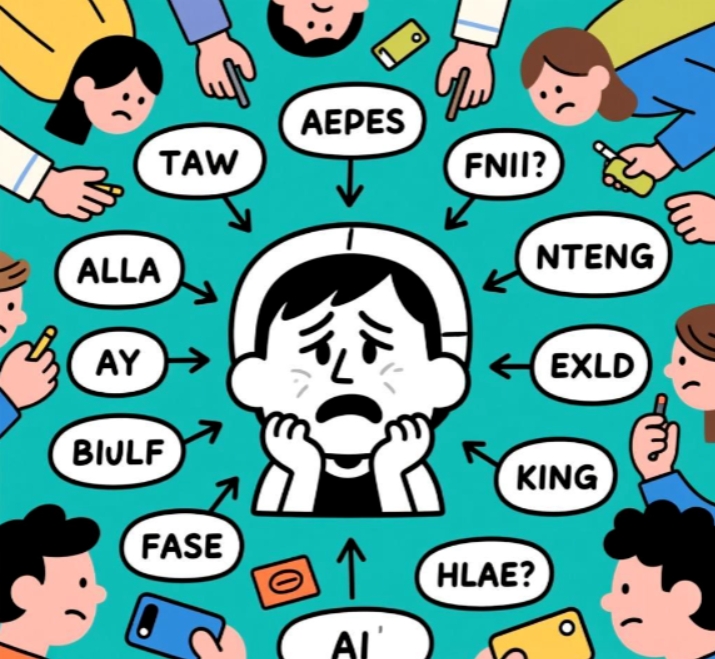
When we use AI to help us think, our thoughts converge. Cornell University researchers found that when people use AI writing assistants, their vocabulary and sentence structures become more uniform. In code, this means we all start using the same patterns, the same variable names, the same error handling logic.
We are optimizing away the “weirdness.” And in tech, weirdness is often where innovation hides.
The “Model Collapse” Ghost
There’s a technical term for what happens when AI trains on AI-generated data: Model Collapse.
It’s like making a photocopy of a photocopy. Do it enough times, and the image turns into noise. As the web fills with synthetic text, future models will be training on their own hallucinations. They will drift away from reality, becoming more confident but less accurate.
We are polluting our own water supply.
Why I Still Write (And You Should Too)
So, is this a eulogy for the technical blog?
No. It’s a manifesto for a different kind of writing.
If you write to rank on Google, you are already dead. You cannot out-generate a machine. You cannot out-optimize an LLM.
But if you write to connect, you have a monopoly.
1. Be “Inefficient”
AI is hyper-efficient. It gives you the answer immediately. But humans crave the journey. We want to hear about the 12 hours you spent debugging a typo. We want to hear about your irrational hatred for a specific library. We want the “inefficient” stories that AI would edit out.
2. Embrace the “Weird”
AI aggregates the average. It gives you the most probable next token. To stand out, you must be improbable. Share your controversial opinions. Build things that make no sense. Write about the edge cases that the “average” ignores.
3. The Human API
Writing is no longer about information transfer; it’s about signaling. When I read a post by a human, I’m not just downloading data. I’m looking for a person. I’m looking for someone who shares my values, my struggles, and my sense of humor.
In a world of synthetic perfection, flaws are the new premium feature.
Conclusion
The internet might be filling up with noise, but that just makes the signal more valuable.
We don’t need more “Ultimate Guides.” We need more diaries. We need more war stories. We need more “Weekly Logs” like this one, written by a tired human at 11 PM, trying to make sense of a changing world.
So I’m going to keep writing. Not for the algorithm, but for the archive. And hopefully, for you.